
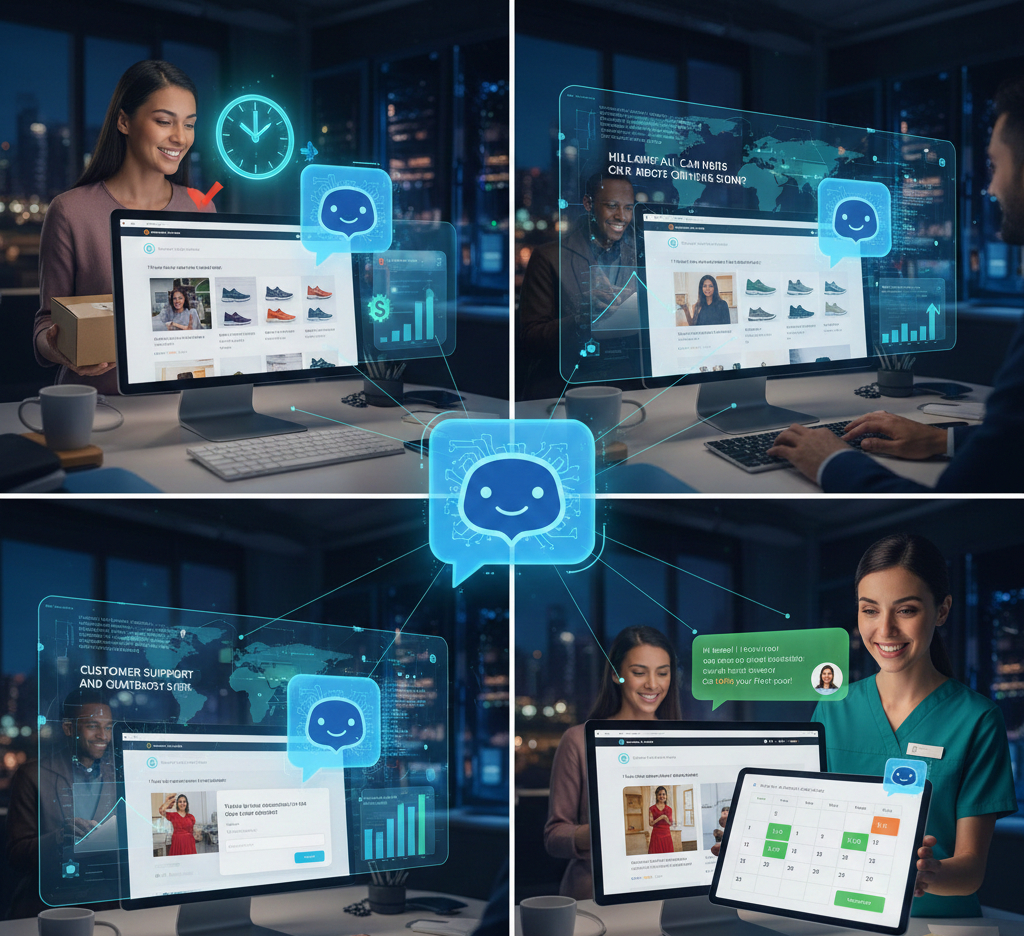

Small and medium enterprises (SMEs) are under intense pressure to deliver outstanding customer support fast, flawless, and round-the-clock without breaking the bank. Today’s customers demand instant answers, 24/7 availability, and personalised interactions, and anything less risks losing their loyalty. AI-powered chatbots are rewriting the rules, empowering SMEs to deliver premium, human-like support at scale, all without a massive team or skyrocketing costs.
What Are AI-Powered Chatbots?
AI-powered chatbots are software applications that use artificial intelligence, natural language processing (NLP), and machine learning to interact with users in real-time. Unlike basic rule-based chat systems, AI chatbots understand context, interpret queries, and provide relevant responses, often mimicking human-like conversations.
For SMEs, this technology is particularly appealing because it automates repetitive tasks, reduces response times, and scales customer support without significantly increasing overhead. Chatbots can handle multiple customer inquiries simultaneously, freeing up staff to focus on complex issues that require human judgment.
Benefits of AI Chatbots for SMEs
1. 24/7 Availability
One of the most significant advantages of AI-powered chatbots is their ability to operate around the clock. Customers can reach out at any time, whether it’s during business hours or late at night, ensuring no query goes unanswered. This continuous availability enhances customer satisfaction and fosters loyalty.
For SMEs competing against larger enterprises, providing round-the-clock service can level the playing field. A chatbot integrated into your website or messaging platforms ensures that customers receive instant assistance, reducing frustration and increasing the likelihood of conversions.
2. Cost Efficiency
Hiring and training a large customer support team can be expensive, especially for SMEs. AI chatbots help reduce operational costs by automating routine inquiries such as FAQs, order tracking, appointment scheduling, and account management.
By offloading repetitive tasks to chatbots, human agents can focus on more complex issues, improving overall efficiency. When combined with solutions like Contact Center as a Service (CCaaS), SMEs can scale their support infrastructure without incurring the high costs associated with traditional call centers.
3. Personalised Customer Experience
Modern AI chatbots can access customer data and interaction history to deliver personalised experiences. By understanding past interactions, preferences, and purchase history, chatbots can offer tailored recommendations, troubleshoot issues more effectively, and even suggest upsells or cross-sells.
Personalisation is crucial for SMEs seeking to build strong customer relationships. A chatbot that remembers a customer’s preferences and engages them with relevant information creates a sense of care and attention that enhances brand loyalty.
4. Multichannel Support
Customers today expect to interact with businesses across multiple platforms, including websites, mobile apps, social media, and messaging services. AI-powered chatbots can seamlessly operate across all these channels, ensuring a consistent experience.
For example, integrating chatbots with 2-way text messaging or Unified Communications as a Service (UCaaS) platforms enables SMEs to centralise communication, respond faster, and maintain continuity across channels. This omnichannel capability is a significant differentiator for small businesses trying to compete in a saturated market.
5. Enhanced Data Collection and Insights
Every interaction a chatbot has with a customer is a valuable data point. AI chatbots can track customer behavior, common questions, pain points, and feedback in real-time. This data can be analysed to improve products, services, and customer engagement strategies.
SMEs can leverage these insights to make data-driven decisions, refine their marketing campaigns, and enhance overall operational efficiency. When integrated with analytics tools in cloud communications or SD-WAN solutions, businesses gain a comprehensive view of customer interactions and network performance, improving service delivery.

Real-World Applications of AI Chatbots for SMEs
Customer Support Automation
The most common application of AI chatbots is automating customer support. Chatbots can answer frequently asked questions, guide customers through troubleshooting processes, and even escalate issues to human agents when necessary.
For instance, a small e-commerce business can use a chatbot to assist with order tracking, returns, and product information. By automating these routine tasks, the business ensures faster response times and higher customer satisfaction.
Lead Generation and Qualification
AI chatbots can also play a crucial role in sales and marketing. They can engage website visitors, capture lead information, and qualify prospects based on predefined criteria.
For SMEs, this means generating leads without requiring a large sales team. A chatbot can interact with potential customers in real-time, answer questions, and even schedule appointments, ensuring that no opportunity is missed.
Appointment Scheduling and Booking
Service-oriented SMEs, such as salons, clinics, and consultancies, can benefit from chatbots that manage appointments. Customers can check availability, book time slots, and receive reminders automatically, reducing scheduling errors and no-shows.
This functionality integrates seamlessly with mobility and IoT solutions, allowing businesses to streamline operations and improve efficiency.
Proactive Customer Engagement
AI chatbots can be programmed to initiate conversations based on user behavior. For example, if a customer spends time browsing a particular product page, the chatbot can pop up to offer assistance or promotions.
This proactive approach increases engagement, encourages conversions, and enhances the overall user experience. SMEs that implement proactive chatbot strategies often see higher retention rates and stronger customer relationships.
Integration with Other Business Technologies
AI chatbots do not operate in isolation they are most effective when integrated with other business systems and communication platforms.
Cloud Communication Systems
Integrating chatbots with cloud-based solutions like CCaaS allows SMEs to centralise customer interactions. Agents can seamlessly take over conversations initiated by chatbots, ensuring a smooth transition and uninterrupted support.
Security and Compliance
Handling customer data comes with responsibility. SMEs must ensure that chatbot systems comply with data protection regulations and maintain robust security measures. Leveraging best practices in cybersecurity helps protect sensitive information and maintain customer trust.
Mobility and Remote Access
With the rise of remote work and mobile-first business strategies, chatbots can provide support through mobile apps and IoT-enabled devices. This ensures that both customers and employees can access services anytime, anywhere, enhancing flexibility and responsiveness.
SD-WAN and Network Reliability
A reliable network is essential for AI chatbots to function optimally. SMEs can leverage SD-WAN solutions to ensure secure, high-performance connectivity, reducing downtime and enhancing the customer experience.
Challenges and Considerations
While AI chatbots offer numerous benefits, SMEs should be aware of potential challenges:
- Complex Queries: Chatbots are best suited for routine inquiries. Complex issues may require human intervention.
- Initial Setup: Deploying AI chatbots requires investment in technology, integration, and training.
- Customer Acceptance: Some customers prefer interacting with humans. Businesses must balance automation with personalised human support.
- Data Privacy: Ensuring compliance with regulations such as GDPR is critical when collecting customer data.
By addressing these challenges proactively, SMEs can maximise the value of AI-powered chatbots while maintaining high-quality support standards.
Best Practices for Implementing AI Chatbots
- Define Clear Objectives: Understand what you want the chatbot to achieve support, lead generation, booking, or engagement.
- Integrate Seamlessly: Connect chatbots with existing platforms like UCaaS and CRM systems.
- Start Small: Begin with a limited set of features and expand as you learn from customer interactions.
- Train Continuously: Use machine learning to improve chatbot responses over time.
- Monitor Performance: Track key metrics such as response time, resolution rate, and customer satisfaction.
The Future of AI Chatbots for SMEs
AI technology continues to evolve, and chatbots are becoming increasingly sophisticated. Future advancements may include:
- Voice-Enabled AI: Conversational AI capable of natural voice interactions.
- Advanced Personalisation: Hyper-personalised experiences based on predictive analytics.
- Emotional Intelligence: Chatbots that detect sentiment and adjust responses accordingly.
- Seamless Integration with IoT: Enabling smarter interactions across devices and platforms.
For SMEs, staying ahead in AI chatbot adoption can be a game-changer, providing competitive advantage, cost savings, and exceptional customer experiences.
FAQs
What are AI-powered chatbots and how do they work?
AI-powered chatbots use artificial intelligence, natural language processing (NLP), and machine learning to interact with customers in real-time. Unlike basic chat systems, they understand context, interpret queries, and provide human-like responses.
How can AI chatbots benefit SMEs?
AI chatbots help SMEs deliver 24/7 customer support, reduce operational costs, offer personalised experiences, and provide multichannel assistance across websites, apps, and messaging platforms. They free human agents to focus on complex tasks.
Can AI chatbots handle complex customer queries?
While chatbots excel at routine inquiries, complex issues often require human intervention. Integrating AI chatbots with CCaaS or UCaaS ensures smooth escalation to live agents when necessary.
Are AI chatbots secure and compliant with data regulations?
Yes, but SMEs must implement robust cybersecurity practices and comply with data privacy regulations like GDPR. Secure integration with cloud communication and SD-WAN solutions ensures safe handling of customer data.
How can SMEs get started with AI chatbots?
Start by defining clear objectives, integrating chatbots with existing platforms, launching with essential features, and continuously training the AI. Monitoring performance and leveraging analytics helps optimise responses and customer engagement.
Supercharge Your Customer Support with AI Chatbots
AI-powered chatbots are no longer just a novelty; they are essential tools for SMEs aiming to elevate customer support, streamline operations, and deliver personalised experiences. By integrating AI chatbots with platforms like CCaaS, UCaaS, and other digital solutions, small and medium enterprises can compete with larger players and exceed the expectations of modern customers.
Investing in AI chatbots means investing in scalability, efficiency, and customer satisfaction. Contact WebTel Media today to discover how AI-driven support can future-proof your business and keep you ahead in a competitive digital landscape.
Recent Comments