

Companies are no longer just connecting people, they’re connecting devices, data, and workflows across entire ecosystems. The convergence of Internet of Things (IoT) technology and Unified Communications (UC) platforms is revolutionising the way businesses operate, enabling smarter, faster, and more efficient communication. For small and medium enterprises (SMEs) and larger organisations alike, understanding this intersection is crucial to staying competitive.
Understanding IoT and Unified Communications
What is IoT?
The Internet of Things (IoT) refers to a network of connected devices that communicate with each other and with central systems to collect, exchange, and analyse data. From smart sensors in factories to connected office equipment, IoT devices generate real-time insights that can inform business decisions, improve operations, and enhance customer experiences.
What is Unified Communications?
Unified Communications (UC) integrates multiple communication channels voice, video, messaging, conferencing, and collaboration tools into a single platform. Solutions like Unified Communications as a Service (UCaaS) allow businesses to centralise communications, streamline workflows, and enhance collaboration across distributed teams.
Why the Convergence Matters
When IoT and UC converge, devices are not just connected they actively communicate and trigger actions within business processes. For example, a smart sensor in a warehouse could detect a temperature change and immediately notify the relevant team through a UC platform, allowing instant intervention. This integration transforms data into actionable intelligence, improving operational efficiency, reducing downtime, and enhancing decision-making.
Key Benefits of IoT and UC Integration
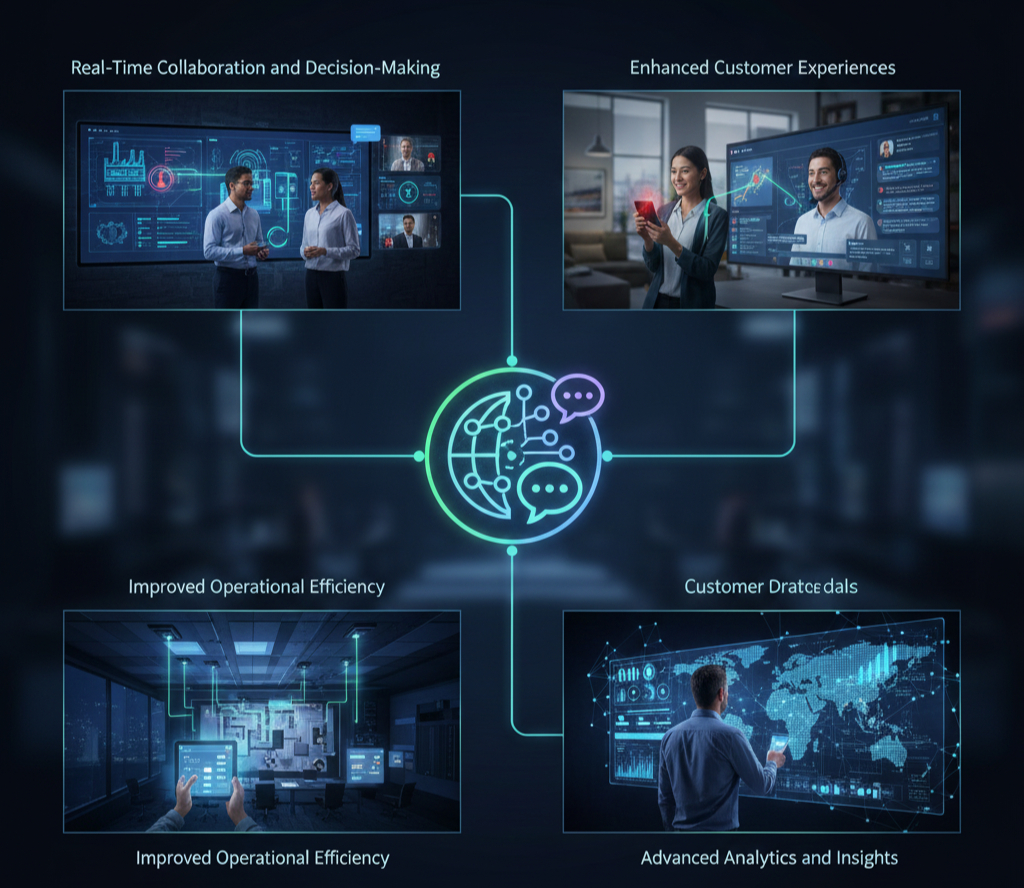
1. Real-Time Collaboration and Decision-Making
IoT devices generate vast amounts of data, but that data is only useful if it’s actionable. When integrated with UC systems, this information can be delivered directly to the right team members via instant messaging, alerts, or video conferencing.
For example, a facility manager might receive an automated alert on their UC platform when an IoT sensor detects equipment malfunction. Teams can immediately collaborate via CCaaS solutions to resolve issues without delays, reducing downtime and operational costs.
2. Enhanced Customer Experiences
IoT data can provide deep insights into customer behavior, usage patterns, and preferences. By linking this data to communication platforms, businesses can proactively address customer needs.
Imagine a connected device in a customer’s home reporting an issue with a service. The company can automatically trigger a notification through its UC platform, schedule a service call, or even engage in 2-way text messaging to communicate directly with the customer. The result is faster resolution, higher satisfaction, and stronger customer loyalty.
3. Improved Operational Efficiency
IoT devices can monitor everything from inventory levels to energy consumption. By integrating this data with UC platforms, businesses can automate workflows and trigger communications based on real-time conditions.
For instance, smart office sensors could detect meeting room availability and automatically update calendars, send notifications, and even adjust mobility and IoT solutions to optimise space and energy use. This reduces manual tasks and maximises productivity across teams.
4. Advanced Analytics and Insights
The combination of IoT and UC creates a rich ecosystem of data points that can be analysed for trends, anomalies, and predictive insights. SMEs can leverage these insights to make data-driven decisions that improve efficiency and drive growth.
Integrating IoT data with SD-WAN solutions also ensures secure and high-performance connectivity, enabling reliable access to data and UC tools even across distributed networks.
Real-World Applications
Smart Offices and Workspaces
IoT-enabled offices can optimise lighting, temperature, and occupancy, while UC platforms allow seamless communication between employees. For example, a smart sensor detects that a conference room is empty, and the UC system automatically updates room schedules and notifies employees via instant messaging or mobile alerts.
Connected Manufacturing
In manufacturing, IoT sensors monitor production lines, track equipment performance, and detect anomalies. When integrated with UC platforms, alerts can be sent instantly to maintenance teams or management, enabling immediate corrective action and reducing costly downtime.
Healthcare and Remote Monitoring
Healthcare providers can use IoT devices to monitor patient vitals remotely. UC systems allow doctors and nurses to receive alerts, coordinate care via video conferencing, and communicate instantly with patients or family members, improving both response time and patient outcomes.
Retail and Customer Engagement
Retailers can leverage IoT sensors to track inventory and customer behavior in stores. When combined with UC platforms, employees can receive real-time updates, communicate instantly about stock levels, and proactively assist customers, creating a seamless shopping experience.
Security Considerations
With greater connectivity comes greater risk. Integrating IoT with UC platforms increases the attack surface for cyber threats. Businesses must prioritise security and compliance by implementing robust cybersecurity measures and monitoring IoT networks for vulnerabilities.
Encryption, secure authentication, and network segmentation are essential to protect sensitive data, especially when IoT devices collect customer or operational information. SMEs can also leverage cloud-based UCaaS and CCaaS solutions with built-in security features to reduce risk without sacrificing performance.
Challenges of IoT and UC Integration
- Complexity: Integrating diverse IoT devices with UC platforms can be technically challenging and may require specialised knowledge.
- Interoperability: Devices and communication systems from different vendors may have compatibility issues.
- Scalability: As businesses grow, managing thousands of connected devices and communication channels can become complex.
- Cost: Initial deployment and integration can be costly, though the long-term benefits often outweigh upfront expenses.
Despite these challenges, the benefits of IoT and UC integration enhanced efficiency, improved customer experience, and data-driven decision-making make it a worthwhile investment.
Best Practices for Businesses
Start with Clear Objectives
Determine the goals of IoT and UC integration. Are you aiming to improve operational efficiency, enhance customer experience, or both? Clear objectives will guide technology selection and implementation.
Prioritise Security
Ensure all devices and communication channels are secure. Implement best practices for data protection and compliance, and consider cloud-based solutions with built-in security features.
Choose Scalable Solutions
Select IoT and UC platforms that can scale with your business. Solutions like UCaaS and CCaaS provide flexible, cloud-based options that grow with your needs.
Focus on Integration
Ensure seamless interoperability between IoT devices, UC platforms, and other business systems such as CRM, ERP, or analytics tools. Integration is key to unlocking the full potential of connected ecosystems.
Leverage Analytics
Collect and analyse data from IoT devices and UC interactions to gain actionable insights. This will help optimise processes, predict trends, and make smarter business decisions.
The Future of IoT and Unified Communications
The convergence of IoT and UC is only going to accelerate. Future trends include:
- AI and Predictive Analytics: Advanced AI will analyse IoT data and trigger automated UC responses before issues arise.
- Voice-Enabled IoT: Voice commands integrated with UC platforms will simplify device management and workflow automation.
- Edge Computing: Processing IoT data closer to the source will reduce latency and improve real-time decision-making.
- Seamless Omnichannel Communication: UC platforms will provide a single interface to manage all connected devices, employees, and customers.
Businesses that embrace this convergence now will be better positioned to leverage the full potential of connected technologies, drive efficiency, and deliver exceptional customer experiences.
FAQs
What is the convergence of IoT and Unified Communications?
It’s the integration of connected devices (IoT) with communication platforms (UC) to enable real-time data sharing, workflow automation, and smarter business operations.
How does IoT improve business communication?
IoT devices provide live data from equipment, sensors, or systems. When linked with UCaaS platforms, this data triggers instant alerts, messages, or collaboration, improving efficiency and decision-making.
What are the key benefits for SMEs?
Benefits include real-time collaboration, enhanced customer support, operational efficiency, data-driven insights, and the ability to scale without heavy IT investment using solutions like CCaaS.
Are there security risks when integrating IoT and UC?
Yes. More connected devices increase exposure to cyber threats. Implementing strong cybersecurity practices, encryption, and network monitoring is essential to protect sensitive business data.
What are practical applications of IoT and UC integration?
Applications include smart offices, connected manufacturing, remote healthcare monitoring, and retail customer engagement. For example, IoT sensors can detect issues and automatically alert teams via UC platforms for immediate action.
Unlocking the Power of IoT and Unified Communications
The convergence of IoT and Unified Communications is reshaping the way businesses operate. By connecting smart devices with advanced communication platforms, companies can streamline operations, enhance customer experiences, and make smarter, data-driven decisions.
For SMEs and larger enterprises alike, adopting IoT-enabled UC platforms and cloud-based solutions like CCaaS and UCaaS is no longer optional; it’s a strategic necessity. Businesses that embrace this convergence today are positioning themselves to thrive in tomorrow’s connected, digital-first economy.
Don’t get left behind. Explore how WebTel Media can help your business integrate IoT and Unified Communications for smarter workflows, improved collaboration, and superior customer support. Contact us now to start your digital transformation journey.
Recent Comments